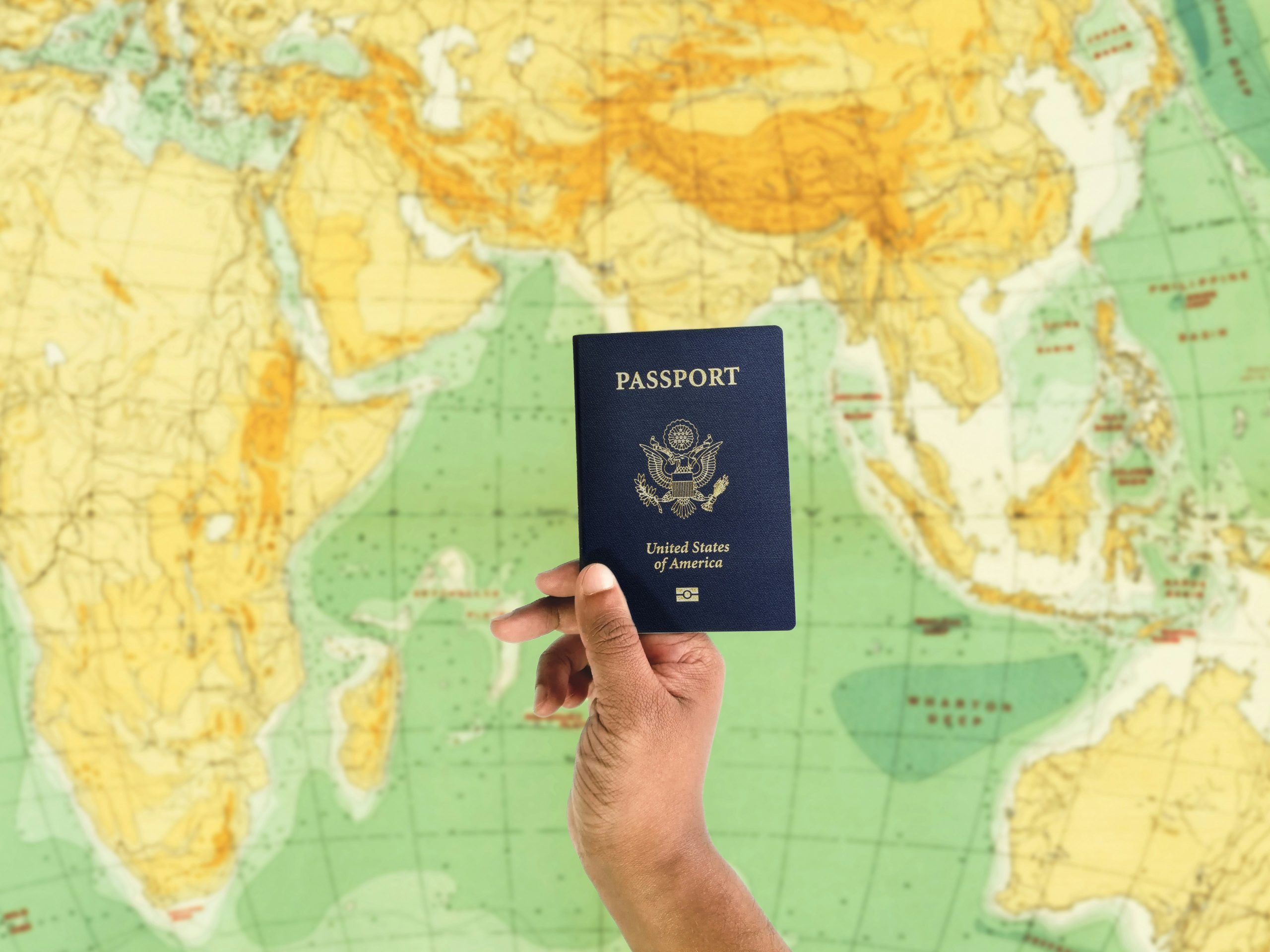
It is quite a major achievement to get admission to a university in the United States, but admission is only one part of the journey. If you are trying to understand what happens between receiving your admission letter and actually travelling to the United States, this guide will walk you through the US student visa process step by step.
For an academic student, the process can involve several unfamiliar terms: F-1 visa, SEVP, I-20, SEVIS, I-901 fee, DS-160, and visa interview. Seeing all of them at once can make the process seem more complicated than it really is.
The easiest way to understand it is to follow the order in which things happen.
You generally begin with admission to an eligible school. The school then handles the relevant SEVIS process and issues your Form I-20. After that, you complete the visa application, prepare your supporting documents, attend the required interview, and wait for a decision.
This guide explains what each stage means, what you need to prepare, and what can go wrong if you overlook an important detail.
If you are still deciding where and how to study abroad, you can first read our Study Abroad: Complete Guide for International Students for the wider process before focusing specifically on the United States.
One final warning before we begin: U.S. visa rules, fees, and procedures can change. Use this article as a practical guide, but always verify current requirements before submitting your application.
What Is a US Student Visa?
A US student visa is a nonimmigrant visa used by eligible international students who want to travel to the United States for an approved programme of study.
The visa category depends on the type of program.
The main categories relevant to students include:
- F-1: academic study at universities, colleges and other qualifying academic institutions
- M-1: vocational or other qualifying nonacademic study
- J-1: certain exchange visitor programmes
For a student going to a U.S. university for a bachelor’s, master’s or doctoral program, the F-1 student visa is generally the category to understand.
The U.S. Department of State distinguishes F visas for academic study from M visas for vocational or other recognised nonacademic study. Furthermore, It also explains that students generally cannot use a visitor visa to undertake study leading to a U.S.-conferred degree or certificate.
This distinction matters because “going to America to study” does not automatically mean every student follows the same visa process.
For the rest of this guide, the focus is primarily on the F-1 student visa.
Who Needs a US Student Visa?
If you are a foreign national travelling to the United States to undertake academic study, you generally need the appropriate student visa before travelling.
There are exceptions and different rules for particular circumstances, so do not assume that every short course or educational activity requires an F-1 visa.
For example, the Department of State explains that a visitor B visa may be appropriate for a short recreational course that is not for credit toward a degree or academic certificate. Degree or certificate study is treated differently.
For most students planning to enroll in a U.S. university, however, the important question is not simply:
“Do I need a visa?”
Rather, It is:
“Which student visa applies to my programme, and what do I need to do before I can apply?”
That leads to the first major stage.
US Student Visa Process: Start With Your School
The visa application does not normally begin with the DS-160.
It starts with your education plans.
You need to apply to an appropriate school and receive admission before moving through the student-visa process.
For F-1 and M-1 students, the school must be certified through the Student and Exchange Visitor Program (SEVP).
This is one reason you should research a university carefully before accepting an offer.
Check:
- Whether the institution offers your intended programme
- Tuition and other costs
- Admission conditions
- Funding opportunities
- Programme duration
- International-student requirements
- Whether the institution is appropriately certified to enrol international students
Do not choose a school simply because somebody on social media said that it is “easy to get a visa” through that institution.
The university’s admission decision and the government’s visa decision are separate.
A school can admit you to a programme. That does not mean the U.S. government is required to issue you a visa. In other words, A school can accept you, but that does not mean you will automatically get a U.S. student visa.
Where university selection fits into the process
Your choice of university can affect almost every part of your preparation.
For example, the cost of your programme influences your financial planning. The programme you choose affects your academic documents. The school’s location affects living expenses. Your course also needs to make sense alongside your previous education and plans.
If you are still comparing institutions, our guide on How to Choose the Right University Abroad: A Complete Guide can help you work through that stage before concentrating on the visa.
What Is Form I-20?
After you are accepted by an eligible school and the relevant SEVIS process is completed, the school issues your Form I-20.
For an F-1 student, this is one of the most important documents in the visa process.
The I-20 contains information about your school and programme and includes your SEVIS identification information.
You will need it when moving through the student visa process, including the visa interview.
When you receive your I-20, do not simply save it in your email and forget about it.
Read it.
Check details such as:
- Your name
- Date of birth
- School information
- Programme
- Programme start date
- Programme end date
- SEVIS information
- Financial information where applicable
If you notice an error, contact the appropriate school official.
Do not attempt to alter the document yourself.
Why the I-20 matters
Imagine that David receives admission for a master’s programme beginning in August.
His university issues his I-20, but he notices that the programme information does not match what he expected.
That is the time to contact the university.
It is much better to resolve the problem before completing the rest of the visa process than to discover an inconsistency immediately before an interview.
SEVIS and the I-901 Fee Explained
Another part of the US student visa process that confuses first-time applicants is the difference between SEVP, SEVIS, the I-20, and the I-901 fee.
They are connected, but they are not the same thing.
- SEVP is the programme involved in certifying schools and administering the relevant student/exchange visitor framework.
- SEVIS is the Student and Exchange Visitor Information System.
- I-20 is the document issued to an eligible F-1 or M-1 student by the school.
- I-901 SEVIS fee is the applicable fee paid by eligible students in connection with SEVIS.
For F and M students, the current I-901 SEVIS fee is $350. Because government fees can change, check the official I-901 SEVIS fee information before making payment.
A useful way to picture the sequence is:
School admission → SEVIS registration → I-20 → I-901 SEVIS fee → visa application
The process starts with school admission, followed by SEVIS registration and the issuance of your Form I-20. You then pay the I-901 SEVIS fee before completing your US student visa application.
The stages are connected, but paying the SEVIS fee does not mean you have already received a visa.
US Student Visa Requirements
Once you reach the visa application stage, you need to prepare the documents and information relevant to your circumstances.
The core documents generally include:
- Valid passport
- Form DS-160 confirmation page
- Form I-20
- Evidence of the required SEVIS registration/payment
- Visa application fee payment evidence where required
- Photograph where required
- Academic records
- Financial evidence where relevant
- Other supporting documents that may be requested
The exact documents can vary according to the applicant and the instructions of the embassy or consulate handling the application.
The State Department also explains that an applicant may be asked for evidence relating to academic preparation, the ability to pay educational, living and travel expenses, and the intention to depart the United States after completing the course.
That means you should not approach the requirements as a simple “collect these ten documents and you are finished” exercise.
Your documents should make sense together.
US Student Visa Documents: How to Prepare Them
A document checklist is useful, but understanding why you need each document is even more useful.
| Document: What | what it helps establish |
|---|---|
| Passport | Your identity and travel document |
| DS-160 confirmation | Confirms your submitted visa application |
| Form I-20 | Identifies your student programme and school |
| SEVIS information | Shows your relevant student record |
| Visa fee receipt | Evidence of payment where required |
| Photograph | Meets applicable visa photo requirements |
| Academic records | Shows your educational preparation |
| Financial evidence | Helps demonstrate how your study and living costs will be funded |
| Additional documents | May support your circumstances if requested |
Academic documents
Depending on your circumstances, you may need documents such as:
- Academic transcripts
- Certificates
- Diplomas or degrees
- Standardised test results required by your school
For example, if you are going to the United States for a master’s degree, you should be familiar with the undergraduate education that qualifies you for the programme.
Do not carry an academic document simply because someone online told you that “the embassy always asks for it.”
Understand your own application and follow the current instructions for your location.
Financial documents
Your financial documents should support the story of how your education will be paid for.
That could involve:
- Personal funds
- Family support
- Scholarship funding
- Sponsorship
- A combination of funding sources
Keep relevant documents organised and make sure you understand what they show.
If your father is funding your education, for example, you should be able to explain that clearly and understand the financial evidence supporting the arrangement.
Financial Requirements for a US Student Visa
Financial preparation deserves more attention than simply asking:
“How much money should be in my bank account?”
There is no single universal bank-balance figure that automatically applies to every F-1 applicant.
Your financial needs depend on factors such as:
- Tuition
- Programme length
- Living costs
- School location
- Scholarships
- Financial aid
- Personal funding
- Family or sponsor support
The State Department says a consular officer may request evidence showing how the applicant will pay educational, living and travel costs.
A practical example
Suppose Maria is admitted to a two-year master’s programme.
Her university estimates that one academic year will cost $45,000.
She receives a $15,000 scholarship.
Her family plans to cover the remaining amount.
Maria should understand:
- The total estimated cost.
- How much the scholarship covers.
- Who will cover the remaining amount.
- What evidence supports that funding.
Simply presenting a large-looking bank balance without understanding where the money comes from is not the same as being properly prepared.
Likewise, do not assume that somebody else’s claimed “minimum bank balance” automatically applies to your university.
How to Apply for a US Student Visa
Once your school and student documents are ready, the application process generally follows these stages.
Step 1: Get accepted by an eligible school
Start with admission to the appropriate programme.
Step 2: Receive your Form I-20
Your school issues the I-20 after the relevant SEVIS process.
Step 3: Pay the I-901 SEVIS fee
Check the current official amount and payment instructions before paying.
Step 4: Complete Form DS-160
Submit the online nonimmigrant visa application accurately.
Step 5: Pay the visa application fee
The current nonimmigrant visa application fee for the relevant student visa categories is $185.
Step 6: Follow your embassy or consulate’s appointment instructions
The exact process for scheduling an interview can vary by location.
Step 7: Prepare your documents
Organise your passport, I-20, DS-160 confirmation, financial evidence, academic records, and other relevant documents.
Step 8: Attend your interview
Be prepared to explain your programme, university, funding, and plans truthfully.
Step 9: Wait for a decision
Some applications may require additional administrative processing.
Step 10: Prepare for travel if your visa is issued
Remember that visa issuance and admission into the United States are separate stages.
Before submitting your application, review the official U.S. Department of State Student Visa guidance for the latest requirements, application steps and instructions for your location.
How to Complete the DS-160
The DS-160 is the online nonimmigrant visa application.
You should have important documents available while completing it, including your passport and, for students, your I-20 because the application asks for information such as your SEVIS ID and school details.
Take your time.
Check:
- Personal information
- Passport information
- Previous travel information where applicable
- Education history
- Work history where applicable
- School information
- Programme information
- SEVIS information
- Other answers relevant to your circumstances
The Department of State advises applicants to answer the DS-160 accurately and completely.
After submitting the application, keep the confirmation page because it forms part of the visa process.
Do not rush the DS-160.
Imagine that your university documents show that you are entering a master’s programme in computer science, but you accidentally enter a different programme description on the DS-160.
That mistake can create unnecessary questions.
Your objective should be accuracy and consistency, not trying to phrase answers in a way that you think will make the application look better.
US Student Visa Interview
For many applicants, the interview is the most intimidating part.
The best preparation is not memorising a speech.
It is understanding your own application.
A consular officer may ask about areas such as:
- Your university
- Your course
- Your academic background
- Why you chose the programme
- How your studies will be funded
- Your plans after completing your studies
The State Department explains that officers may consider academic preparation, ability to pay educational and living costs, and the applicant’s intention to depart after completing the course.
Questions you should be prepared to answer
You may encounter questions such as:
Why did you choose this university?
Give a genuine reason based on your research.
Why did you choose this programme?
Explain how it fits your academic background, interests, or career plans.
Who is paying for your studies?
Know your funding arrangement and understand the supporting documents.
What do you plan to do after graduation?
Answer truthfully based on your actual plans.
Practise, but do not memorise a script
You can practise answering questions aloud.
You can even ask someone to conduct a mock interview and ask follow-up questions.
But avoid memorising long paragraphs.
If you memorise a perfect answer to one question and the officer asks a slightly different question, you may struggle to respond naturally.
Know your facts instead.
Common US Student Visa Interview Mistakes
Here are some common mistakes you should avoid during a US student visa interview:
Memorising artificial answers
A memorised speech can make it harder to handle follow-up questions naturally.
Prepare your information and reasons instead of trying to reproduce a script word for word.
Not knowing your programme
You should understand what you are going to study and why you selected it.
If you cannot explain your own programme, even a simple question can become difficult.
Being unclear about funding
Know exactly how your education will be funded.
If a parent, sponsor, or scholarship is paying for your studies, understand the arrangement and the evidence supporting it.
Giving inconsistent information
Your DS-160, I-20, academic documents, and interview responses should generally tell a consistent story.
If something genuinely changed, explain the change truthfully rather than trying to hide it.
Providing false information
Do not invent qualifications, funding arrangements, or travel plans.
False information or fraudulent documents can have serious immigration consequences.
Assuming admission guarantees a visa
Your university decides whether to admit you.
The U.S. government separately determines whether you qualify for the visa.
Those are two different decisions.
Using outdated information
Visa procedures and fees can change.
A video or article from several years ago may no longer describe the current process.
Always check current official guidance before acting.
US Student Visa Cost
There is more than one cost to consider.
Visa application fee
The current nonimmigrant visa application fee for F-category applications is $185.
I-901 SEVIS fee
The current I-901 SEVIS fee for F and M students is $350.
Other expenses
You may also need to budget for:
- Passport-related costs
- Photograph expenses
- Travel to the interview location.
- Document preparation
- Translation where required
- Other country-specific expenses
- Travel to the United States after visa issuance.
Your total preparation budget therefore should not be based on the visa application fee alone.
US Student Visa Processing Time
There is no single processing time that applies to every student.
Interview appointment availability can vary according to:
- Location
- Season
- Visa category
- Appointment demand
- Individual circumstances
- Administrative processing
For this reason, start the process early.
If your programme begins in August, waiting until the final few weeks before your intended departure can create unnecessary pressure.
You may need time to:
- Complete the application
- Secure an interview appointment.
- Resolve a document problem.
- Respond to additional requests.
- Make travel arrangements after approval.
Follow the current instructions for the embassy or consulate where you are applying.
What Happens After Your US Student Visa Is Approved?
Visa approval is not the same as being admitted into the United States.
Think of the process as:
Visa application, followed by visa decision, then travel, then inspection at the U.S. port of entry and finally admission.
The Department of State makes clear that having a visa does not guarantee admission. The appropriate U.S. border authority makes the admission decision when you arrive.
This is also why you should be cautious about buying expensive, non-refundable travel arrangements before your visa has been issued.
If your visa is approved, check the visa details carefully when you receive your passport.
Make sure the information is consistent with your travel plans and programme documents.
When Can You Enter the United States?
New F and M student visas can be issued up to 365 days before the start date of the course.
However, a new student generally cannot enter the United States more than 30 days before the programme start date.
For example, if your programme begins on August 25, receiving your visa months earlier does not mean you can enter the United States whenever you choose.
The 30-day restriction still applies.
Check your I-20 and the current official instructions before booking your travel.
What Should You Do After Arriving in the United States?
The visa is not the end of your immigration responsibilities.
Once you arrive, you need to follow the rules attached to your student status and your school’s instructions.
This can include:
- Beginning your programme as required
- Maintaining your student status
- Keeping your immigration documents organised
- Communicating with your school’s designated official when necessary
- Following applicable employment restrictions
- Reporting relevant changes according to the required procedures
This is why it is better to think about the student visa as one stage of your U.S. study journey, rather than the entire journey.
Can F-1 Students Work in the United States?
Some F-1 students may be eligible for certain types of employment, but an F-1 visa is not a general work permit.
Employment rules depend on the type of work and the applicable immigration requirements.
For example, employment connected with your student status can have different rules from employment that requires specific authorisation.
If you plan to work while studying, check the current rules and speak with the appropriate official at your school before accepting employment.
Do not rely on a statement such as “F-1 students can work 20 hours” without checking the circumstances behind that statement.
US Student Visa Checklist
Use this checklist before your interview.
Before applying
- Apply to an appropriate U.S. school.
- Confirm the school is appropriately SEVP-certified
- Receive admission
- Receive your Form I-20
- Understand your SEVIS information.
- Pay the applicable I-901 SEVIS fee.
- Prepare financial evidence
- Organise academic documents
- Check your passport
During the application
- Complete Form DS-160 accurately
- Save the confirmation page.
- Pay the applicable visa fee.
- Follow local embassy or consulate instructions.
- Schedule the interview
- Organise your supporting documents.
Before the interview
- Know your university
- Know your programme
- Understand your funding
- Review your DS-160 information.
- Practise answering questions naturally.
- Organise the documents relevant to your circumstances
After approval
- Check your visa details.
- Confirm your programme start date.
- Plan travel within the permitted entry period
- Carry the required documents.
- Follow your school’s instructions after arrival.
- Understand the rules for maintaining your student status
Frequently Asked Questions About the US Student Visa
How much does a US student visa cost?
The current nonimmigrant visa application fee for the relevant student visa categories is $185. F-1 students also generally need to account for the I-901 SEVIS fee, currently $350. Other expenses can apply depending on your circumstances.
How much bank balance is required for a US student visa?
There is no single bank-balance amount that automatically applies to every F-1 student. Your financial evidence should support the cost of your particular education and living expenses and explain how those costs will be funded.
Can I get an F-1 visa without IELTS?
IELTS is not a universal F-1 visa requirement. A university may have its own English-language admission requirements, but those should not be confused with the government’s visa requirements.
How long does a US student visa take?
There is no universal processing period. Interview appointment availability varies by location and season, while some applications can require additional administrative processing.
Can I work with an F-1 visa?
Some F-1 students can work under specific rules and authorisations, but an F-1 visa is not permission to take any job without restriction.
Does university admission guarantee a US student visa?
No. Admission and visa issuance are separate decisions.
How early can I apply for an F-1 visa?
New F and M student visas can be issued up to 365 days before the programme start date, although new students generally cannot enter the United States more than 30 days before the start date.
Can I enter the United States immediately after receiving my visa?
No. New students are generally subject to the 30-day entry restriction.
Can my spouse or children come with me?
Eligible spouses and unmarried minor children may apply for the appropriate dependent visas in qualifying circumstances. They receive their own required documentation.
Key Takeaway
The US student visa process becomes much easier to understand when you stop looking at it as one huge application and instead follow the stages in order.
Start with the right school and programme. Get your admission, receive your I-20, complete the relevant SEVIS steps, submit your DS-160, prepare your documents, attend your interview, and then wait for the visa decision.
Your preparation should go beyond collecting paperwork.
Know what you are going to study. Understand why you chose the university. Know how your education will be funded. Review the information you submitted. Most importantly, make sure your answers and documents are truthful.
Do not build your application around advice from an old social media post or a student who applied several years ago. U.S. visa procedures and fees can change, and instructions can also differ by location.
Before you submit your application, check the latest official guidance for the current process and the U.S. embassy or consulate where you will apply.
A well-prepared applicant is not someone who memorises the “perfect” interview answer. It is someone who understands their own application, knows what each major document means, and is prepared for the next step in the process.